RU
RU  EN
EN 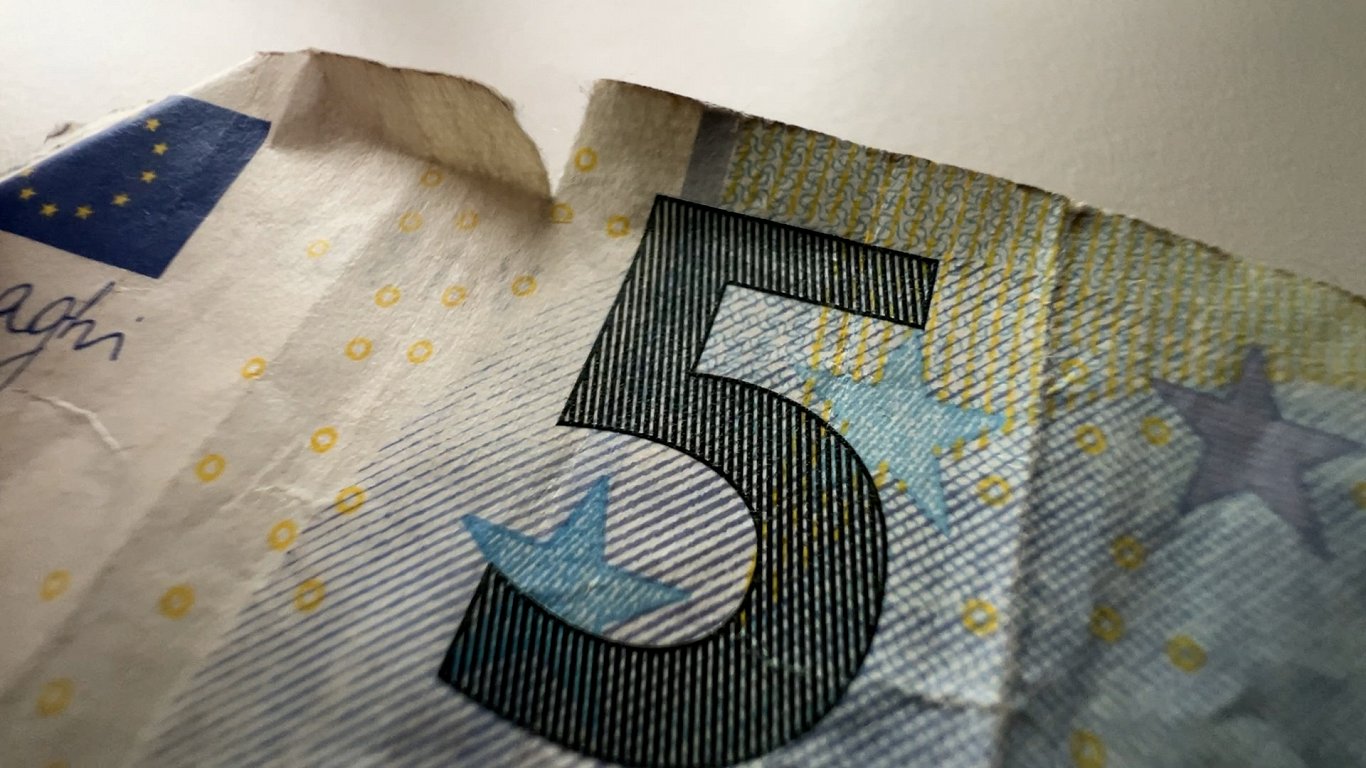
Which Damaged Banknotes Can Be Accepted?
A foreign banknote must remain legal tender in its country of issue and retain the main features that make it possible to establish its authenticity and validity.
In particular, the banknote should retain the name of the issuing bank, its number and series, denomination, main images on both sides and the required security features.
The main principle is that damage may be acceptable only if it does not prevent the bank from determining the authenticity and validity of the banknote.
Minor Damage May Be Accepted Without a Commission
Certain types of minor damage have specific limits.
For example, some foreign banknotes may be accepted without a commission if they have:
-
tears no longer than 0.5 cm — no more than three;
-
punctures or holes no larger than 1 mm in diameter — no more than three;
-
small oil or other stains that are not visible without special inspection equipment — no more than three, provided their total area does not exceed 1.5 cm².
The rules may differ depending on the currency. In particular, Moldovan leu and Ukrainian hryvnia banknotes with permitted minor damage may be accepted without a commission if they do not have defects classified as more serious damage.
What Happens to Damaged US Dollars, Euros and Russian Rubles?
US dollars, euros and Russian rubles have a separate category of damage for which a bank may accept the banknotes while charging a commission.
This may include:
-
tears longer than 0.5 cm but no longer than 1 cm — up to three;
-
punctures or holes larger than 1 mm but no larger than 2 mm in diameter — up to three;
-
a reattached torn corner or fragment with an area of no more than 1 cm² — no more than one, provided the detached piece belongs to the same banknote and the serial number remains completely intact;
-
oil and other stains, including ink, paint, mold and moisture marks — up to three, provided their total area does not exceed 15% of the banknote's area;
-
inscriptions and stamp marks — up to three, provided their total area does not exceed 15% of the banknote's area.
Therefore, a small inscription or stain on a US dollar or euro banknote does not necessarily mean that the bank will refuse it. However, the transaction may be subject to a commission.
Do Not Throw Away a Torn Dollar Immediately
If a US dollar or euro banknote has been torn, keep all of its pieces.
For example, if a small corner has been detached, keep it. Under the applicable rules, a banknote with a reattached fragment may be accepted if the detached part is no larger than 1 cm², belongs to the same banknote and the serial number remains completely intact.
If a substantial part of the banknote is missing or the damage results in the loss of an essential feature of legal tender, the bank may refuse it.
Can You Bring a Dollar Repaired With Tape?
The presence of adhesive tape does not automatically mean that a banknote will be refused.
The rules allow certain torn banknotes, including repaired tears, to be accepted. What matters is the length and number of the tears.
For US dollars, euros and Russian rubles, tears longer than 0.5 cm but no longer than 1 cm may be accepted when there are no more than three, with a commission being charged.
If the damage exceeds the permitted limits, the banknote may fall into the category of unacceptable banknotes.
What About a Dollar With Writing on It?
Writing on a foreign banknote does not necessarily mean that it will be refused.
For US dollars, euros and Russian rubles, the rules allow certain banknotes with inscriptions and stamp marks to be accepted, including marks that are visible only under ultraviolet light.
The number of marks must not exceed three and their total area must not exceed 15% of the banknote's area.
A commission is charged for accepting a banknote with this type of damage according to the bank's applicable fees.
What If the Banknote Has a Stain?
Stains are also classified according to the degree of damage.
Small stains that cannot be seen without special inspection equipment may fall into the category of damage that can be accepted without a commission, subject to the applicable limits.
For US dollars, euros and Russian rubles, more visible stains may also be accepted — no more than three and with a total area not exceeding 15% of the banknote's area. In this case, the bank charges a commission.
Stains may include ink, paint, mold and moisture marks.
Which Damaged Banknotes Will a Bank Refuse?
Some types of damage place a banknote into the category of unacceptable banknotes.
A bank may refuse a banknote if:
-
it is discolored;
-
part of the banknote is missing or an essential feature of legal tender has been lost;
-
required security features have been damaged or removed;
-
there are signs of burning or scorching;
-
the banknote is substantially worn due to prolonged circulation;
-
the paper has lost its density, become excessively thin or started to separate into layers;
-
the damage exceeds the applicable limits;
-
the main images have been substantially altered;
-
the security thread has been removed;
-
there is an obvious printing defect;
-
the word “SPECIMEN” appears on the banknote;
-
the banknote has been officially withdrawn from circulation by the issuer.
Why Can a Very Thin Banknote Be Refused?
Sometimes a banknote may appear almost intact but have become thin, soft and layered due to prolonged circulation.
This condition may also be a reason for refusal.
This is important: the absence of a large tear does not necessarily mean that the banknote is acceptable. Its overall physical condition is taken into account.
What Should You Do With a Burned Banknote?
Banknotes showing signs of burning or scorching fall into the category of unacceptable banknotes.
Do not try to repair a severely burned banknote yourself with glue, tape or other materials.
If a banknote has been seriously damaged, you should ask the bank about the available procedure for the specific currency and circumstances.
Who Decides Whether a Banknote Is Accepted?
The final decision on whether a foreign banknote is classified as damaged or defective is made by the bank's cashier.
This means that a customer cannot always determine the category of damage by looking at one particular defect.
This is especially true when the degree of damage cannot be determined visually or special inspection equipment is required.
What If the Cashier Cannot Determine the Condition?
At some bank branches located outside the head office or main branch, damaged foreign banknotes may not be accepted if the cashier cannot determine the degree of damage.
In such cases, the question of acceptance may be considered when the customer contacts the bank's head office or an appropriate branch.
If a banknote has unusual or complicated damage, it is therefore better to ask the bank in advance where it can be inspected.
Why Should You Check Banknotes During a Large Exchange?
If you receive a large amount of foreign cash, inspect the banknotes during the transaction.
Pay particular attention to:
-
tears;
-
holes and punctures;
-
stains;
-
inscriptions;
-
reattached fragments;
-
security features;
-
the overall condition of the paper.
If any banknote looks questionable, point it out to the cashier immediately.
Should You Compare Exchange Rates When Exchanging Damaged Currency?
Yes, but the exchange rate is not the only factor.
For an ordinary banknote, comparing banks usually means comparing the applicable buying or selling rate. For a damaged banknote, you should also consider whether a commission will be charged and what the bank's specific acceptance rules are.
For example, a higher exchange rate does not necessarily mean a better deal if a significant additional commission is charged for accepting the damaged banknote.
When exchanging damaged currency, it is therefore sensible to check both the exchange rate and the total cost of the transaction in advance.
The Three Main Categories: Minor Damage, Commission and Refusal
Damaged banknotes can broadly be divided into three groups:
| Situation | Result |
|---|---|
| Minor permitted damage | Bank accepts the banknote without a commission |
| More significant but permitted damage | Bank accepts the banknote with a commission |
| Damage exceeds the permitted limits | Bank refuses the banknote |
The exact category depends on the currency, the type of damage, its size and the number of defects.
Conclusion
A damaged US dollar, euro or Russian ruble does not necessarily have to be thrown away. In Transnistria, there are established rules for accepting damaged banknotes. Some types of damage are accepted without a commission, while others may result in a commission.
Pay particular attention to the size of tears and holes, the number of damaged areas, the total area of stains and inscriptions, and the condition of the serial number and security features.
If a banknote is severely worn, discolored, burned, missing important parts or has serious damage, a bank may refuse it.
When in doubt, the final decision is made by the bank's cashier. If the degree of damage cannot be determined at the branch, the banknote may need to be examined at the bank's head office or another appropriate branch.
Before exchanging a large amount of damaged foreign currency, it is advisable to check the bank's current requirements, any applicable commission and the current exchange rate.