RU
RU  EN
EN 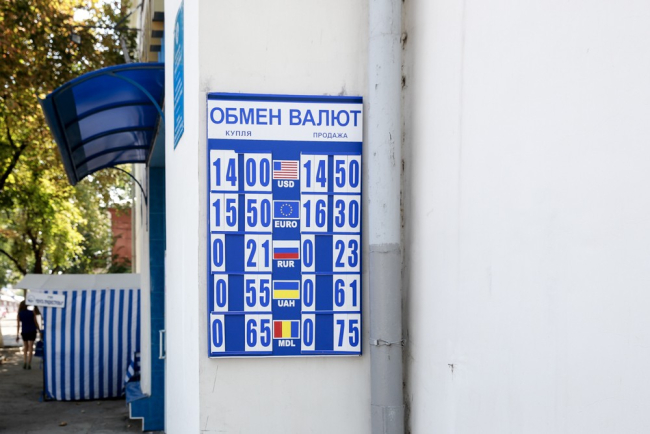
What Does the Buying Rate Mean?
The buying rate is the price at which a bank is willing to buy foreign currency from you.
For example, suppose you have USD 1,000 and need Transnistrian rubles.
You are effectively selling US dollars to the bank.
Therefore, you need to use the bank's buying rate for USD.
If the bank buys US dollars at 16.30 Transnistrian rubles per dollar, you would receive:
1,000 × 16.30 = 16,300 Transnistrian rubles
The actual amount may also depend on commissions and the specific conditions of the transaction.
What Does the Selling Rate Mean?
The selling rate is the price at which a bank sells foreign currency to a customer.
For example, if you need USD 500 and want to pay for it with Transnistrian rubles, you need to use the bank's selling rate for USD.
If the selling rate is 16.35 Transnistrian rubles per dollar:
500 × 16.35 = 8,175 Transnistrian rubles
This is one of the most common mistakes when people calculate an exchange themselves: they see the more attractive number in a bank's table but do not consider the direction of the transaction.
The Simple Rule
Remember:
| Your transaction | Rate to use |
|---|---|
| You give USD and receive Transnistrian rubles | USD buying rate |
| You give Transnistrian rubles and receive USD | USD selling rate |
| You give EUR and receive Transnistrian rubles | EUR buying rate |
| You give Transnistrian rubles and receive EUR | EUR selling rate |
The same principle applies to other currencies.
Why Is the Buying Rate Lower Than the Selling Rate?
Banks normally do not buy and sell currency at the same price.
The difference between the two rates is called the exchange-rate spread.
In simple terms, a financial institution buys currency from one customer at one price and sells it to another customer at a higher price.
The difference between these prices is one of the elements of the economics of currency exchange.
Therefore, it is normal for a bank to buy a dollar for less than the price at which it sells that dollar.
For example:
| Transaction | Rate |
|---|---|
| Bank buys USD | 16.30 PRB |
| Bank sells USD | 16.35 PRB |
If you sell USD 1,000 to the bank, the buying rate applies.
If you buy USD 1,000 from the bank, the selling rate applies.
How Can You Avoid Choosing the Wrong Rate?
The easiest method is to determine two things first:
-
What currency do you have?
-
What currency do you want to receive?
For example, suppose you have Moldovan lei and want Transnistrian rubles.
You give Moldovan lei to the bank and receive Transnistrian rubles.
From your perspective, you are buying Transnistrian rubles.
Therefore, you need the rate at which the bank sells Transnistrian rubles.
Now consider the opposite situation.
You have Transnistrian rubles and want Moldovan lei.
You give Transnistrian rubles to the bank and receive Moldovan lei.
You are therefore selling Transnistrian rubles and should use the corresponding buying rate.
For more complicated currency pairs, a currency converter can make the calculation easier before you compare the result with the actual bank's terms.
Why Can the Amount You Receive Differ From a Simple Calculation?
Even if you have correctly selected the buying or selling rate, the final amount may sometimes differ from a simple mathematical calculation.
Possible reasons include:
-
commissions;
-
special conditions for certain transaction amounts;
-
specific rules for a particular type of transaction;
-
changes in the exchange rate between the time you viewed the rate and the time of the transaction.
Therefore, before making a large exchange, ask the bank not only for the current exchange rate but also how much you will actually receive or how much you will have to pay after all applicable charges.
Why Should You Compare Several Banks?
Exchange rates can differ from one bank to another.
Even a small difference can become significant when exchanging a large amount.
For example, when exchanging several thousand US dollars, a difference of just a few kopecks or tenths of a ruble per dollar can result in a noticeable difference in the final amount.
Therefore, before exchanging money, it makes sense to compare the rates offered by several banks rather than simply choosing the first available option.
Kurspmr.com allows you to compare buying and selling rates for the main currencies offered by banks in Transnistria and then use the currency calculator to estimate the amount of the exchange.
What Is the Exchange-Rate Spread?
The difference between the selling rate and the buying rate is called the spread.
The larger the spread, the more expensive it can be for a customer to reverse an exchange shortly after making it.
For example, imagine that you exchange Transnistrian rubles for US dollars and then, a few minutes later, decide to exchange those dollars back.
Even if the underlying market conditions have not changed, you may receive fewer Transnistrian rubles simply because the bank's buying rate is lower than its selling rate.
This is why a currency exchange should not be considered completely cost-free simply because no separate commission is displayed.
The spread itself is part of the economics of the exchange.
How Do You Know Which Bank Offers the Best Rate?
Do not compare just one number.
Compare the rate that applies to your actual transaction.
If you want to buy foreign currency
Compare the selling rates.
All else being equal, a lower selling rate means you will need less local currency to buy the same amount of foreign currency.
If you want to sell foreign currency
Compare the buying rates.
All else being equal, a higher buying rate means you will receive more local currency for the same amount of foreign currency.
Also consider:
-
commissions;
-
transaction limits;
-
availability of the required currency;
-
other conditions that may apply.
The highest or lowest number in a table does not necessarily mean that it is the best option for your particular transaction.
How to Calculate a Currency Exchange Yourself
If you are selling foreign currency to a bank, multiply the amount of foreign currency by the bank's buying rate.
For example, if you sell USD 500 at a buying rate of 16.30:
500 × 16.30 = 8,150 Transnistrian rubles
If you want to buy USD 500 at a selling rate of 16.35:
500 × 16.35 = 8,175 Transnistrian rubles
These are simplified examples that do not include possible commissions or additional bank conditions.
For an actual transaction, always use the current rate.
What About the Official Exchange Rate?
The official exchange rate and the commercial bank exchange rate are not the same thing.
The official rate may be used as a reference or for specific calculations, but a cash exchange at a commercial bank is normally carried out using the bank's current commercial rate.
Therefore, when exchanging cash, look specifically for the rate that the bank applies to your transaction.
On Kurspmr.com, official rates and commercial bank rates are shown separately, allowing you to compare them.
Why Do Exchange Rates Change?
Currency rates can be affected by:
-
financial market conditions;
-
supply and demand;
-
the economic situation;
-
decisions made by financial regulators;
-
the bank's own operating conditions.
A rate you see in the morning may therefore be different later in the day.
If you are interested in how rates have changed over time, it can also be useful to look at historical exchange-rate data and charts.
However, historical movements cannot guarantee what the exchange rate will be in the future.
Should You Wait for the “Perfect” Exchange Rate?
Trying to predict the exact future exchange rate involves uncertainty.
Nobody can guarantee that tomorrow or next week the rate will be better than today's rate.
If you need currency for a particular purchase or trip at a specific time, it is generally more practical to focus on your actual need rather than trying to profit from short-term exchange-rate movements.
For a large amount, you may consider exchanging the money in several stages. This can reduce your dependence on the rate on one particular day, but it does not guarantee a better result.
The Most Important Rule
Before exchanging currency, always determine the direction of the transaction.
If you sell foreign currency to the bank → look at the buying rate.
If you buy foreign currency from the bank → look at the selling rate.
Then compare several banks, check for commissions and calculate the final amount you will actually receive or spend.
The best exchange rate is not necessarily the number that simply looks most attractive.
You need to consider:
-
the direction of the exchange;
-
the amount;
-
the buying or selling rate;
-
any commission;
-
the final amount you receive or pay.
For a large transaction, spending a few minutes comparing bank conditions can save a significant amount of money.
Summary
The distinction between buying and selling rates is simple once you look at the transaction from the bank's perspective.
The bank buys currency from you → buying rate.
The bank sells currency to you → selling rate.
If you are visiting Transnistria and need to exchange cash, always determine which currency you are giving and which currency you want to receive before looking at the exchange-rate table.
Then compare the relevant rate across several banks and use a currency calculator to estimate the final amount.